The urgent global fight against climate change compels cities throughout the UK to revise their urban development strategies. Newcastle upon Tyne leads the transformation to sustainability while maintaining its esteemed industrial past. Newcastle demonstrates how urban development can coexist with sustainability through its ambitious net-zero targets and expanding green building programs. What architectural strategies is the city implementing to decrease its carbon footprint? How do Newcastle architects contribute to the development of more sustainable and energy-efficient urban environments?
The Push Towards Net Zero: Newcastle’s Ambitions
The city council of Newcastle has committed to achieving carbon neutrality by 2030 as part of their ambitious plan to cut down carbon emissions. This commitment strongly prioritizes sustainable architecture because buildings represent a major source of carbon emissions through their construction activities and ongoing energy usage for heating and cooling.
Newcastle has concentrated its efforts on three main areas of sustainable urban development to reach its target.
- All new constructions now adhere to strict environmental guidelines as part of Energy-Efficient New Builds.
- Retrofitting Existing Buildings means modernizing older buildings to enhance their energy performance while cutting down their carbon emissions.
- The city of Newcastle advances sustainable energy by investing in green technologies such as solar panels alongside heat pumps and smart energy systems.
Sustainable architects and urban planners who are redesigning traditional methods are leading the implementation of these strategies to meet Newcastle’s extended sustainability objectives.
Green Building Innovations: Newcastle’s Most Sustainable Developments
The Newcastle Helix: A Flagship for Sustainability
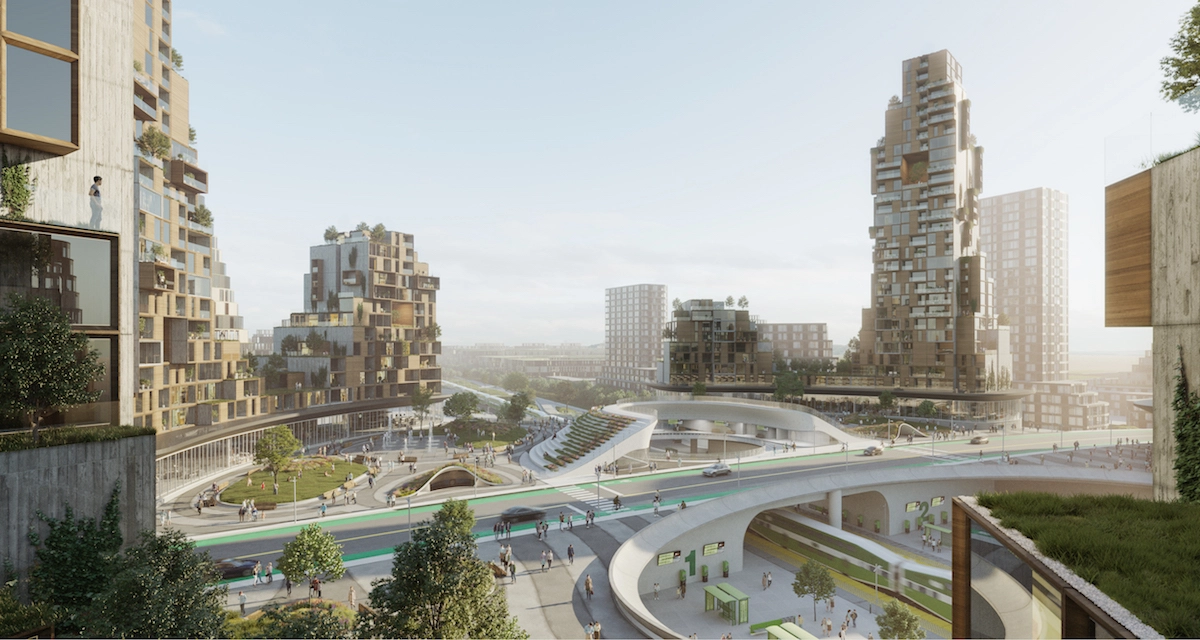
Newcastle Helix stands out as a major sustainable architectural development in Newcastle being designed as a center for science and research innovation. Newcastle City Council together with Newcastle University and Legal & General collaborate on the £350 million Newcastle Helix project.
What elements of Newcastle Helix establish it as a leading example in sustainable development?
- Buildings at Helix have achieved BREEAM Excellent certification which shows they surpass usual sustainability requirements.
- The District Energy Centre operates a modern district heating and cooling network that minimizes fossil fuel use by reusing waste heat and incorporating renewable energy sources.
- Newcastle Helix employs intelligent building management systems to monitor and optimise energy use while maintaining peak heating and cooling efficiency.
The Biosphere: Green Laboratory Spaces
The Biosphere stands out as a premier project at Newcastle Helix because it represents a cutting-edge laboratory facility designed specifically for life sciences research. The Biosphere stands apart from standard laboratory buildings since its construction prioritized sustainable practices to address energy demands for ventilation and temperature control. The building stands out as one of Newcastle’s most eco-friendly commercial properties because of its high-performance insulation, smart lighting systems and energy-efficient HVAC units.
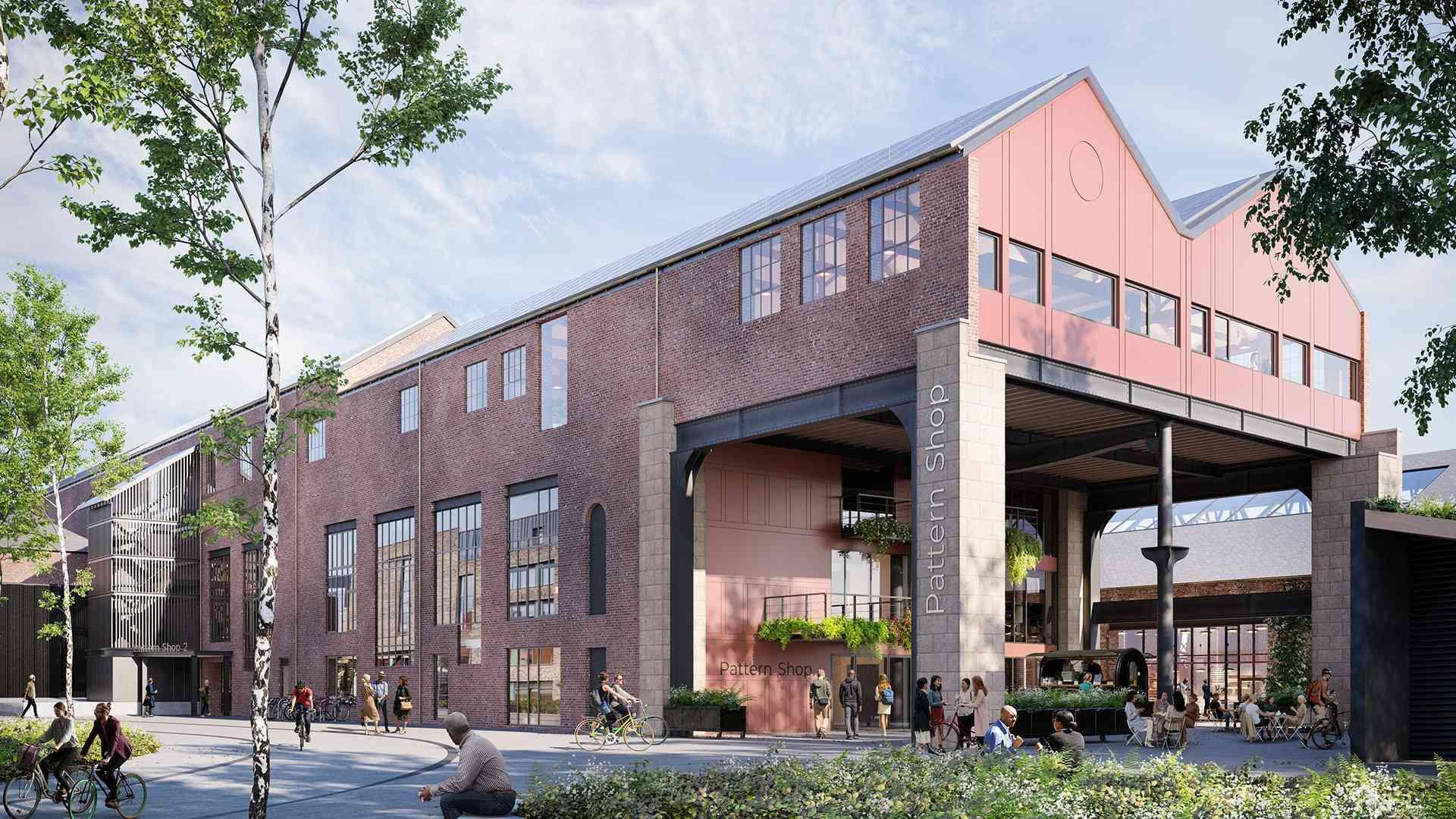
The Pattern Shop: The Pattern Shop transforms a historic industrial building into sustainable office space
Newcastle aims for net zero emissions not only through new constructions but also by retrofitting old buildings. Near Central Station stands The Pattern Shop which serves as a successful transformation of a historic industrial building into a current-use facility.
This Grade II listed building from the 19th-century railway engineering works is currently undergoing a transformation into an office space with low-carbon emissions and high energy efficiency standards. The Pattern Shop project conserves resources by maintaining existing structures instead of demolishing them to build anew thereby lowering waste production and embodied carbon emissions which establishes it as a benchmark for sustainable conservation architecture in Newcastle.
Retrofitting Newcastle: Making Old Buildings Fit for the Future
The main obstacle for Newcastle’s net-zero goals resides in modernizing its current building inventory. The majority of Newcastle’s historical structures including Victorian terraces and post-war office blocks were originally constructed without sustainable design principles. These older structures have inadequate insulation together with obsolete heating systems and inefficient energy usage patterns which result in substantial carbon footprint creation.
Newcastle is directing funds towards energy-efficient retrofitting to address its building challenges.
- The installation of new insulation materials enhances thermal retention and minimizes energy loss.
- Newcastle replaces gas boilers with heat pumps to achieve low-carbon heating solutions.
- Implementing smart energy systems helps maximise power efficiency and minimise energy waste.
- The integration of solar panels with green roofs enables renewable energy generation while supporting biodiversity in urban areas.
The Toffee Factory in Ouseburn stands as a successful retrofit example after converting a rundown industrial building into an energy-efficient workspace for creative professionals. The renovation preserved the building’s original structure while installing advanced insulation features and ventilation systems alongside new energy systems to decrease its environmental impact.
Sustainable Housing: Are Newcastle’s Homes Ready for Net Zero?
The housing sector represents a vital front in our efforts to reduce carbon emissions. The city of Newcastle is experiencing growth in sustainable residential developments through its new housing estates which implement:
- Passive design features were implemented to enhance the availability of natural light and improve heat retention.
- Sustainable energy systems such as solar panels and battery storage systems support green energy solutions.
- These sustainable drainage solutions manage rainwater while preventing flood conditions.
The Rise in Scotswood represents a sustainable housing initiative that delivers affordable homes with energy efficiency features. The estate pioneers future developments in Newcastle through its solar panels and smart heating controls combined with high-performance insulation.
New housing developments integrate sustainable design principles but retrofitting outdated homes continues to pose difficulties. Newcastle City Council leads efforts to enhance insulation and heating in council-owned properties while private homeowners and landlords must act to reach net-zero standards for Newcastle homes.
Local architects: a crucial part in Newcastle’s journey towards sustainability
Newcastle architects and urban planners provide essential expertise needed for sustainable innovation which enables the transition to net zero architecture. The city’s architectural firms are progressively focusing their expertise on specialized sustainable practices.
- Newcastle architectural firms are advancing sustainable building methods that reduce waste and lower carbon emissions.
- An architecture practice selects environmentally responsible materials such as reclaimed wood and recycled steel while using non-toxic insulation methods.
- Living walls and urban forests represent green infrastructure alongside rainwater harvesting systems.
HL Architects stand out as a major influence in this initiative since they specialise in sustainable projects that regenerate heritage sites. Architectural companies that merge contemporary sustainability methods into both historical renovations and new construction projects are vital to establishing Newcastle’s net-zero objectives.
Is Newcastle on Track for Net Zero?
The city of Newcastle has advanced towards lowering its carbon footprint by implementing sustainable architecture practices yet faces ongoing challenges to accomplish its full goals. Newcastle Helix, The Biosphere, and The Rise lead by example yet addressing legacy buildings and making sustainability fundamental for new constructions poses the most significant challenge.
Newcastle needs strong collaborative efforts to reach its net-zero target by 2030. A collaborative effort between developers, city planners and sustainable architects is essential to build a built environment that achieves energy efficiency while maintaining resilience and adaptability with a focus on community needs.
The path Newcastle architects take today will establish whether the city leads in sustainable urban development or falls behind in combating climate change. Newcastle’s transition to net zero depends on its architects and planners along with its residents. We must focus on responsible construction practices while conserving resources today to design a sustainable future.